
How a gutter is supposed to be attached
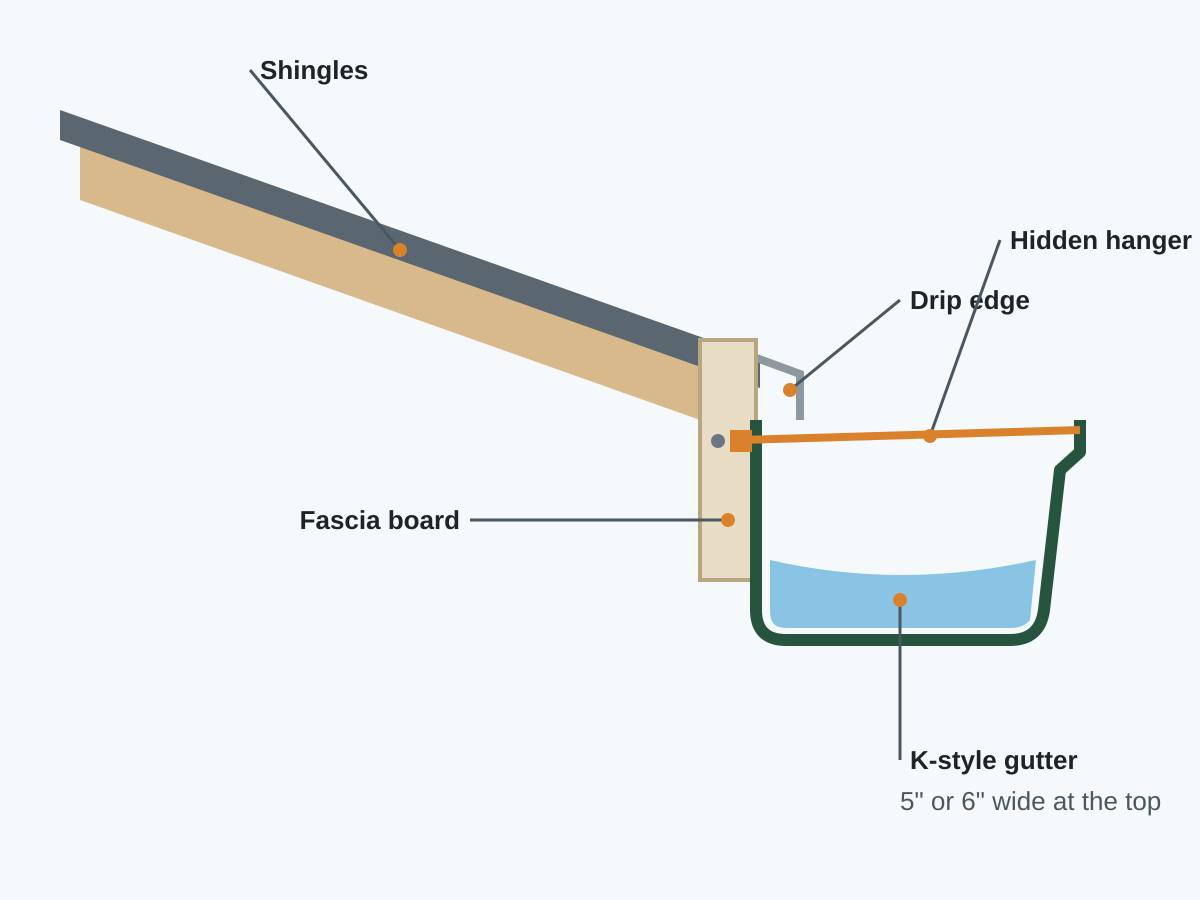
A gutter hangs from the fascia, the board that runs along the ends of the roof rafters. Hangers spaced along the run hold it tight to that board and slightly below the roof edge, so water coming off the shingles, guided by a metal drip edge, lands in the trough. The gutter slopes gently toward the downspouts. When any part of that chain fails (the fastener, the wood, the pitch or the load), the gutter starts to separate.
Six reasons gutters pull away
1. Spike-and-ferrule hangers working loose
Many gutters from the 1970s through the 1990s were hung with long nails (spikes) driven through a sleeve (ferrule) into the fascia. Every cycle of heat, cold, wind and water weight works them back a little, and the nail hole slowly widens. Eventually the spike slides out and the gutter drops away from the board. This is the single most common cause on older Roswell homes.
What to look for: Spike heads sticking out past the gutter lip, or a gap you can see between the back of the gutter and the fascia.
2. Rotted or soft fascia
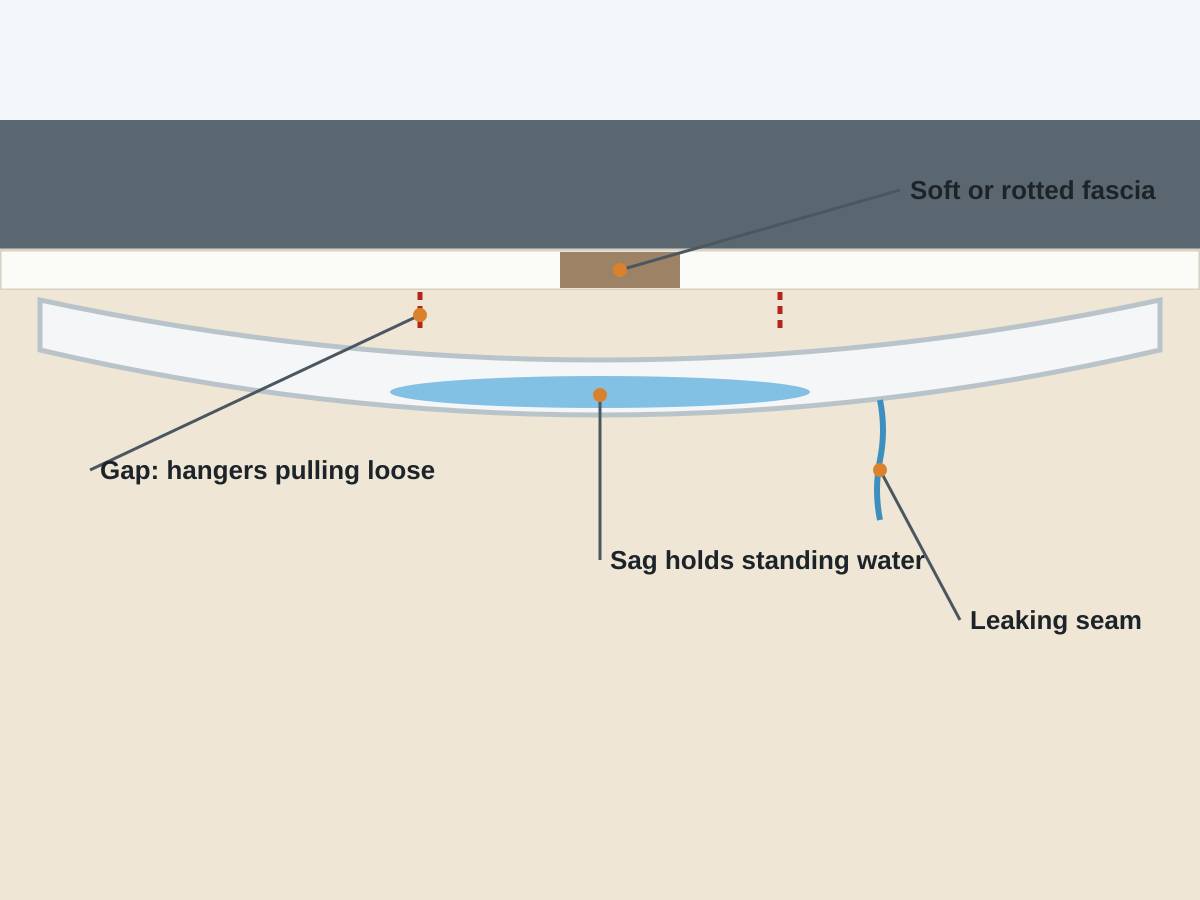
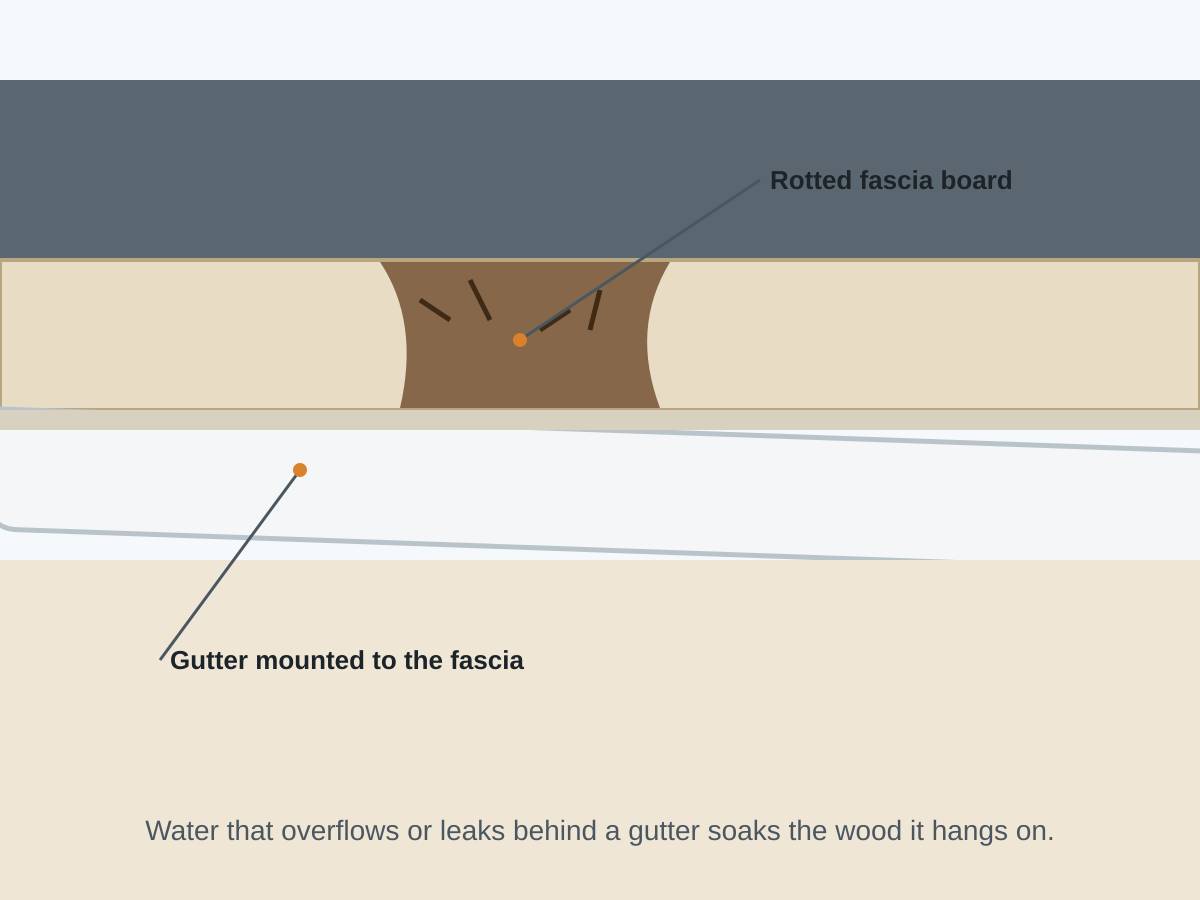
A hanger is only as strong as the wood it screws into. Years of overflow, or water getting behind the gutter because of a missing drip edge, soften the fascia board until fasteners have nothing to grip. The gutter then pulls away no matter how good the hanger is.
What to look for: Peeling paint, dark staining or soft spots along the fascia, and sometimes damaged soffit below it.
3. The weight of packed debris and water
A clogged gutter full of wet leaves, pine needles and standing water is surprisingly heavy. Under a thick canopy that weight builds between cleanings and pries on every hanger. In a hard freeze, ice adds to it; Roswell does not freeze often, but a rare ice storm on a full gutter can bend hangers or pull a run down.
What to look for: Gutters that are also overflowing, sprouting seedlings, or visibly full.
Staying ahead of the debris is the cheapest prevention. Our North Fulton gutter cleaning calendar shows when each kind of tree fills the gutters.
4. Too few or poorly installed hangers
Hangers spaced too far apart, fasteners that missed the rafter tails or hit only thin trim, and cheap plastic clips all leave long spans unsupported. The gutter bows between supports, water gathers in the bow, and the problem compounds.
What to look for: A gentle belly between two hanger points, or hangers you can count and find far apart.
5. Wrong pitch
Gutters need a slight fall toward each downspout. If a run was hung dead level, or pitched the wrong way, water stands in it. That constant weight and moisture stresses the hangers and rots the fascia behind the low spot.
What to look for: Standing water in a clean gutter a day after rain, or overflow at the end farthest from the downspout.
6. Ladders, limbs and impacts
A ladder leaned on the gutter, a falling limb in a storm, or heavy sheets of water off a steep upper roof can bend a section and break its hangers.
What to look for: A kink or dent in one spot, often with a bent hanger.
Why it's worth fixing soon
A slight gap may not look like much, but it changes where the water goes:
- Water runs behind the gutter instead of into it, soaking the fascia and soffit and speeding up rot.
- Roof water lands along the foundation. On Roswell's many sloped lots with walkout basements, that can mean damp basement walls, washed-out beds and erosion.
- Siding and trim stain where water sheets down the wall.
- The problem accelerates. Each failed hanger puts more load on the next one.
- A heavy section can fall, especially on a tall downhill roofline, which is a hazard to anyone below.
Stay safe: don't climb up to push a loose gutter back or lean a ladder against it; a failing gutter can't support a ladder. Look from the ground, keep people clear of a hanging section, and never work from a steep or two-story roof.
What a professional checks
A good gutter pro diagnoses the cause before quoting the fix. Expect them to look at:
- The fasteners: spikes, hidden hangers or clips, how many have failed, and how far apart they are.
- The fascia: probing for soft wood behind and between hangers, and checking the soffit below.
- The drip edge: whether it exists and whether the gutter sits correctly under it.
- The pitch: whether each run drains toward its downspout.
- The gutter itself: seams, corners, dents, and whether it's sized for the roof area above it.
- The downspouts and drains: a clogged outlet makes the gutter hold water and weight.
Repair or replace?
| What's found | Typical approach |
|---|---|
| Gutter is sound; a few hangers or spikes failed | Re-hang with new hidden hangers into solid wood and reset the pitch |
| One area of soft fascia behind a loose section | Replace that fascia section, then re-hang the gutter |
| Many seams leaking, repeated patching, bent or dented runs | Replacement is often better value than repeated repair |
| Gutters too small for the roof, overflowing even when clean | Replace with larger seamless gutters and more downspouts |
| Long stretches of rotten fascia around the house | Fascia replacement, likely with new gutters hung at the same time |
Most pulling-away problems on otherwise healthy gutters are a gutter repair: new hidden hangers into solid wood, a corrected pitch and resealed seams. When the board behind is rotten, fascia and soffit repair has to come first, or the new hangers will fail the same way.
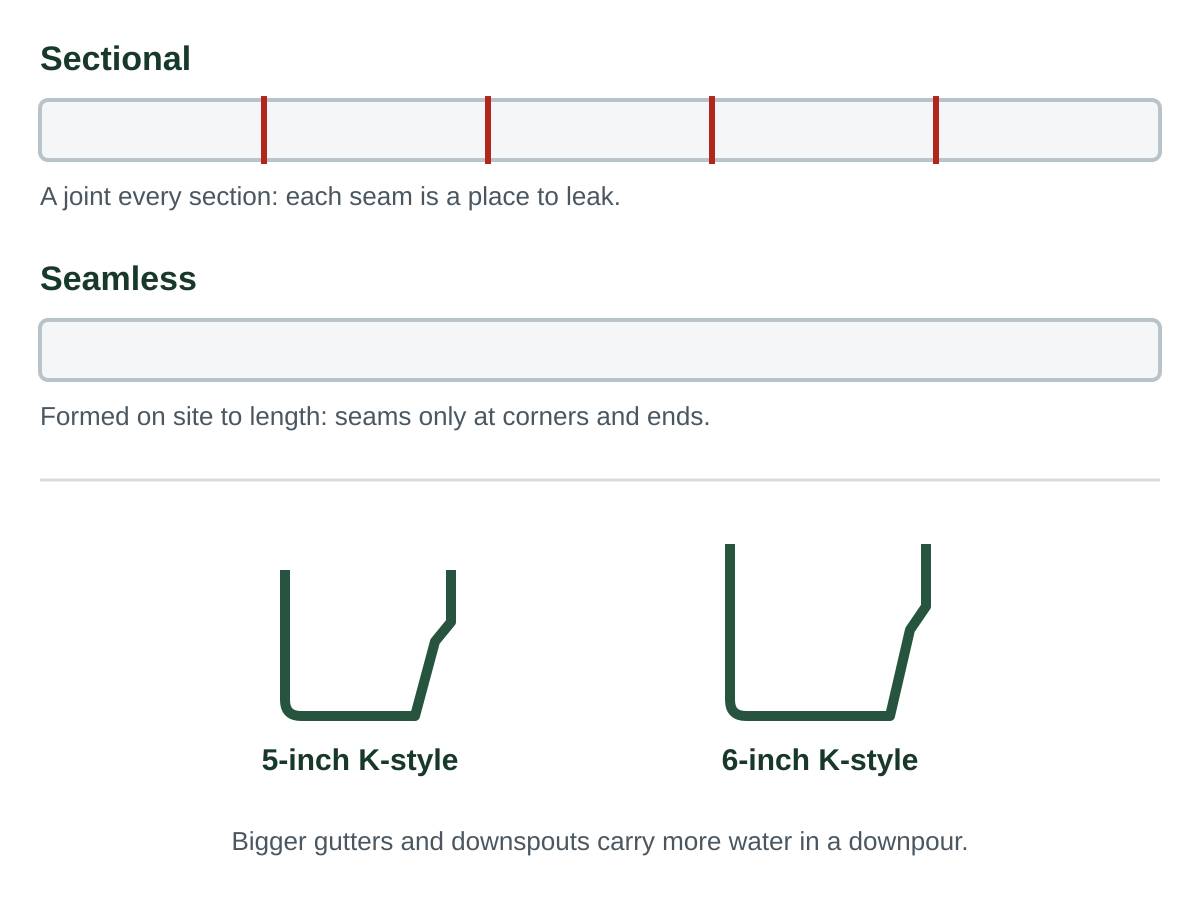
If the gutters are old, leaking at many seams, dented or too small for the roof, it may make more sense to replace them. Newer seamless gutters are formed to length on site and hung with modern hangers, which removes most of the weak points. On older and historic homes with half-round, box or copper gutters, the approach is different; see historic Roswell gutters.
Keeping it from happening again
- Keep gutters and downspouts clear so they don't carry extra weight. See gutter cleaning in Roswell and downspout cleaning.
- Ask for hidden hangers at close spacing when gutters are re-hung.
- Make sure there's a drip edge so water can't run behind the gutter.
- Have guards installed only on gutters that are firmly attached; see our gutter guards page and are gutter guards worth it?
- Never lean a ladder against the gutter itself.
Seeing a gap or a sag? Call (678) 820‑6633 or request a free estimate. A photo from the ground helps. We'll connect you with an experienced, qualified local professional in Roswell.